
Reliance Industries was the top gainer in the Sensex pack, rising over 1 per cent, followed by M&M, HCL Tech, Axis Bank, ICICI Bank and HUL. On the other hand, Bharti Airtel, Maruti, SBI, PowerGrid, NTPC and Tata Steel were among the laggards.

Tatas' brand value grows 12% in the past year, far ahead of Reliance and Airtel.

Six of the top 10 most valued Indian firms added a cumulative Rs 86,683.71 crore in market valuation last week, with HDFC twins emerging as the biggest gainers. On the top 10 chart, HDFC Bank, HDFC, ICICI Bank, Kotak Mahindra Bank, Bharti Airtel and HCL Technologies were gainers. While, Reliance Industries Ltd (RIL), Tata Consultancy Services (TCS), Hindustan Unilever Ltd (HUL) and Infosys saw erosion in their market valuation.

VIL has countered Trai's contention that the RedX plan, which commits higher speeds, should have been informed separately so different aspects could have been examined before such service was launched.

India's telecom sector has been through dizzying peaks, troughs, policy U-turns, court battles, brutal competition, and daily controversies. India could go back to a private sector duopoly with just Reliance Jio and Bharti Airtel surviving the mayhem. The third player, Vodafone Idea, could be history.

Ajit Mishra, vice president, Research, Religare Broking, answers your stock market queries.

Unlike the race to buy airwaves by telecom companies, airports by infrastructure companies and city gas networks by energy companies, the race to develop super apps by consumer-facing companies in India has not brushed up against any regulatory issues. Officials at the ministry of electronics and information technology and at other regulators are happy they do not have to meddle in who among the Tata group, Reliance Industries Ltd, Flipkart or Paytm will manage to build an app that sweeps in customers. Unlike separate apps a customer uses on her mobile to order groceries, buy food or airline tickets or just make payments, a super app can perform all these functions.

Bajaj Finserv was the top gainer in the Sensex pack, rallying over 9 per cent, followed by Titan, Bajaj Finance, Kotak Bank, Bharti Airtel, Nestle India and NTPC. On the other hand, Reliance Industries, IndusInd Bank, Sun Pharma, Axis Bank, ONGC and HUL were among the laggards.

The earnings are, however, expected to be down around 2 per cent on a sequential basis due to pent-up demand getting exhausted and the adverse impact of rising metals and energy prices on consumer goods and manufacturing companies.

Prime Minister Narendra Modi will launch the much-awaited 5G services in India on October 1, 2022, an official release said on Friday. According to the release, 5G to be launched by the Prime Minister in select cities, will progressively cover the entire country over the next couple of years. The cumulative economic impact of 5G on India is estimated to reach $450 billion by 2035. Capable of supporting ultra-high-speed internet services, the fifth generation or 5G is expected to unleash new economic opportunities and societal benefits, serving as a transformational force for Indian society.

The proposed $23-billion mega deal between Bharti Airtel and South Africa's MTN would be India's biggest-ever M&A deal. Let us now take a look at the 10 largest M&A transactions involving an Indian company until now

Top companies have grabbed a bigger pie of their sectors in the pandemic period, leading to a further rise in market concentration in many industries as measured by the Herfindahl-Hirschman Index (HHI). The HHI score, which indicates competitive intensity in an industry (or a lack of it), reached a new high in FY21 as bigger firms raised their revenue market shares either organically or through mergers and acquisitions. A higher HHI score indicates a rise in market concentration in favour of a few firms while a lower score means that the industry's revenue is more evenly divided among many companies

Telcos Reliance Jio and Bharti may post a 5-7 per cent sequential rise in revenue with a steady margin for the second quarter of FY22, according to Jefferies. Bharti's growth will be led by segmented tariff hikes taken in the second quarter ended September, while Jio's growth will be driven by continued subscriber growth, it further said. Jefferies expects the outlook on tariff hikes for Bharti, further details on JioPhone Next for Jio, and tenancy outlook for Indus Towers to be the key things to watch for in the September quarter.

Equity indices nursed losses for the second consecutive session on Tuesday as investors continued to dump IT, banking and FMCG stocks amid a bearish trend in global markets. Unabated foreign fund outflows and the rupee dropping to another record low against the US dollar added to the woes, traders said. Participants were also in wait-and watch mode ahead of release of retail inflation and factory output data.
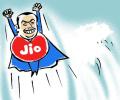
With the Adanis submitting an earnest money deposit (EMD) of just Rs 100 crore on Monday for the upcoming 5G spectrum auction, the apprehension among the rivals that the group is nursing ambitions of being an all-India mobile player has been allayed at least for now. Based on its EMD, analysts say it can buy spectrum worth just Rs 900 crore, whose use will be limited to enterprises and captive networks -- that too is likely only in a few circles where it has its infrastructure like ports, airports, and power stations. While getting all-India millimetre band spectrum of 400 MHz (which costs Rs 2,800 crore) is ruled out, it might choose circles like Gujarat and Mumbai to start with.

In effect, companies which put their money in telecom in India would have done much better to keep the cash in bank and earn interest.

HUL was the top gainer in the Sensex pack, spurting around 3 per cent, followed by Infosys, M&M, ITC, SBI, IndusInd Bank, Bajaj Finance, Asian Paints, TCS and Bharti Airtel. On the other hand, Titan, PowerGrid and NTPC were among the laggards.
Measures reportedly being mulled by the government to ease telecom industry's stress and fundraising may give Vodafone Idea the much-needed breather, but structural issue undermining the sector can be fixed only with "sizable" tariff hike for 4G prepaid customers, according to a note by Edelweiss. It further observed that as Voda Idea's large liabilities are falling due, and given the impending launch of JioPhone Next (whose rollout timeline has now been pushed to before Diwali), "the sooner the government measures as well as tariff hikes are rolled out, the better it is". It is pertinent to mention here that the telecom sector has been keenly watching out for the relief package, which could include redefinition of Adjusted Gross Revenue (AGR) to exclude non-telecom items, cut in levies such as Spectrum Usage Charges and easier terms and conditions for surrendering radiowaves to the government.

The figure is based on the base price of spectrum for the upcoming auction fixed by the TRAI and on the assumption that there will be no bidding war.
Sun Pharma was the top gainer in the Sensex pack, rising over 5 per cent, followed by IndusInd Bank, Tech Mahindra, ONGC, Bharti Airtel, Infosys, ICICI Bank and Bajaj Auto. On the other hand, Kotak Bank, Nestle India, Titan, Bajaj Finance, HDFC Bank and NTPC were among the laggards.

It also said that to make it easier for people to subscribe, Disney+ Hotstar VIP has tied up with telecom players Jio and Airtel.

Microsoft has become the first global Big Tech company to join the Open Network for Digital Commerce (ONDC), an Indian government initiative for developing a first-of-its-kind open network for digital commerce. The world's second-largest technology firm intends to introduce social e-commerce via its app in the Indian market later this year. ONDC is expected to open to the public in Bengaluru over the next fortnight as it enters into the next phase of the pilot for further fine-tuning before rollouts in other cities, according to a source in the know.

'We showcased about 20 use cases in 5G trials in Pune and Gandhinagar and some of them were interesting and innovative.' 'However, which ones will take off and which ones would not be relevant, we don't know yet.'

Chiki Sarkar's literary juggernaut.

With the new entity coming in force, Bharti Airtel will lose the tag of India's biggest telecom service provider to the new entity.

Axis Bank was the top gainer in the Sensex pack, surging around 4 per cent, followed by M&M, HDFC Bank, ITC, SBI, ICICI Bank, Maruti, Kotak Bank and Sun Pharma. On the other hand, HDFC, Titan, Nestle India, Bharti Airtel, ONGC and Infosys were among the laggards.

HCL was followed by Tech Mahindra, Asian Paints, Bharti Airtel, HDFC Bank, L&T, TCS, M&M, Nestle India and Infosys. NSE Nifty rose 23.75 points or 0.20 per cent to 11,896.80.
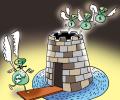
Analysts said even though the Indian economy is expected to slow down to 7.2 per cent in fiscal 2020, it is still the best bet for investment for foreign investors.

Prime Minister Narendra Modi's call to make this decade a "techade" for India and the push for 5G, semiconductors and transformation through digital services is going to boost the technology sector in the country, industry players said on Monday. Modi, in his speech on the 76th Independence Day, touched upon all-round development of technology in the country, from 5G to push for electronic chips, laying of optical fibre cable (OFC) network across villages and enablement of digital entrepreneurship in villages through Common Services Centres, making the present decade as "techade" for India. Homegrown mobile devices maker Lava International's Chairman and Managing Director Hari Om Rai said electronics and technology sectors create about $4 trillion of revenue.

Telecom gear makers, who are in talks with telcos, say that if all goes well, they are ready to roll out the first phase of 5G services from October this year and cover the country's top 30-50 cities (in limited areas) by March 2023. The gear makers expect the telecom companies to give them a heads-up about their plans as well as the equipment required by July, and have promised deployment in three to four months after that. India's main telecom gear suppliers are Nokia, Ericsson and Samsung.

Axis Bank was the top gainer in the Sensex pack, rising around 3 per cent, followed by Sun Pharma, Reliance Industries, ONGC, HDFC, ICICI Bank, Kotak Bank and Bharti Airtel. On the other hand, Infosys, IndusInd Bank, HCL Tech, Nestle India and Tech Mahindra were among the laggards.
Equity markets halted their two-day rally on Friday, with the Sensex tumbling 714.53 points amid weak global equities and selling in index majors Infosys, ICICI Bank, HDFC Bank and Reliance Industries. Continuous foreign fund outflows also dented sentiments. The BSE benchmark Sensex tanked 714.53 points or 1.23 per cent to settle at 57,197.15. During the day, it plummeted 776.96 points or 1.34 per cent to 57,134.72. The NSE Nifty also declined 220.65 points or 1.27 per cent to 17,171.95.

IndusInd Bank was the top gainer in the Sensex pack, rising nearly 6 per cent, followed by Axis Bank, SBI, Maruti, Tech Mahindra and Reliance Industries. NSE Nifty surged 183.70 points to close at 17,166.90.

Telcos in Asia's emerging markets will face higher spectrum liabilities, but these essential costs are not subject to refinancing and have limited immediate impact on cash flows and liquidity, Moody's Investors Service said on Monday. The ratings of Asia-Pacific (APAC) telecom companies in emerging markets can tolerate the increased deferred spectrum liabilities at current levels, if these essential costs are the main driver of high debt or weaker leverage, Moody's Investors Service said in a new report. For emerging markets -- China, India, Indonesia, Malaysia and Philippines -- spectrum liabilities to gross debt will increase to more than 16 per cent in 2021 and 2022, from 11.6 per cent in 2020 and 9.3 per cent in 2018, assuming India completes its 5G spectrum auction in 2022, it added.

Bharti Airtel was the top gainer in the Sensex pack, rallying around 11 per cent, followed by ONGC, UltraTech Cement, ITC, PowerGrid and NTPC. On the other hand, IndusInd Bank, Reliance Industries, L&T and SBI were among the laggards.

Tamil Nadu cadre IAS officer K Rajaraman on Friday took charge as the new telecom secretary. His joining comes following the superannuation of Anshu Prakash on September 30. "Shri K Rajaraman, IAS (TN:89) takes charge as Secretary, @DoT_India in presence of senior officials of the department," a PIB tweet said. He was serving as the additional secretary for investments at the Department of Economic Affairs before being promoted to the position of secretary, DoT.

Bharti Airtel was the top gainer in the Sensex pack, rising around 3 per cent, followed by HUL, HDFC, ITC, IndusInd Bank, SBI, Sun Pharma, ONGC, Tech Mahindra, L&T and Asian Paints. On the other hand, Kotak Bank, Nestle India, Tata Steel, Bajaj Finance and HDFC Bank were among the laggards.

Equity indices made an emphatic comeback on Friday after falling for seven straight sessions after the RBI hiked interest rates by 50 basis points on expected lines and projected inflation coming under control from January next year. A strong recovery in the rupee added to the momentum, traders said. Overcoming a wobbly start, the 30-share BSE Sensex soared 1,016.96 points or 1.80 per cent to settle at 57,426.92. During the day, it rallied 1,312.67 points or 2.32 per cent to 57,722.63.

Equity indices overcame a wobbly start to clock gains for the third session on the trot on Tuesday, propped up by banking, metal and energy stocks amid a mixed trend in global markets. A recovery in the rupee also bolstered sentiment, traders said. The 30-share BSE Sensex advanced 246.47 points or 0.45 per cent to settle at 54,767.62 after starting the trade on a weak note. In a volatile session, the benchmark hit a high of 54,817.52 and a low of 54,232.82 during the day.

Ajit Mishra, vice president, Research, Religare Broking, answers your queries.
 © 2026 Rediff.com - Advertise with us - Disclaimer - Privacy Policy - Sitemap - Feedback - About us - Terms of use - Grievances